Angular SSR ·
Angular event replay: keep the clicks that happen before hydration
With SSR the page looks ready before Angular hydrates. Event replay keeps the clicks that land in that gap. How claude.ai handled it, and how to turn it on.
Anthropic made claude.ai typeable much sooner: the p75 time to a typeable page on a fresh load went from 3.1 seconds to 0.55. One of the changes baked a static composer into the HTML, so people can type while React is still initializing, and React then paints on top of that HTML copy.
The same gap in Angular
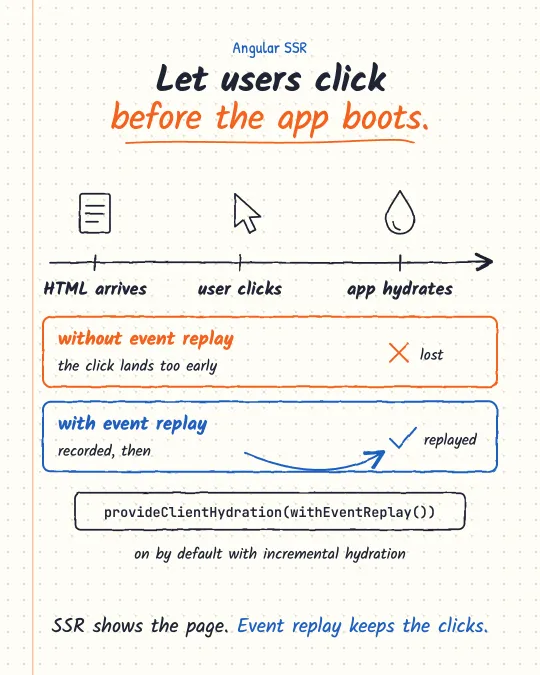
An Angular app rendered on the server has the same window. The HTML arrives and looks interactive, but event listeners are not attached until hydration completes. A click in that window has nothing to handle it.
Event replay
Event replay captures those early interactions and replays them once hydration is done. It is enabled alongside incremental hydration. If you opt out of incremental hydration, you can still turn it on yourself:
import {
  provideClientHydration,
  withEventReplay,
  withNoIncrementalHydration,
} from '@angular/platform-browser';

bootstrapApplication(App, {
  providers: [provideClientHydration(withNoIncrementalHydration(), withEventReplay())],
});
Event replay does not make hydration faster. It makes the wait harmless for the clicks that happen during it, which is often what users notice first.
One more thing to measure
The same claude.ai write-up found that 31% of page loads moved something after the page was usable, without any user interaction. In an SSR app, that is worth checking too: content that shifts as the app takes over is the next thing users trip over once their clicks no longer get lost.
Sources
- How we made claude.ai faster (Anthropic, 23 Sep 2026)
- Hydration guide: capturing and replaying events (angular.dev)
I post short notes like this on LinkedIn.
Need help with this?