Angular release schedule ·
Angular 20 support ends on 28 November 2026: plan the move to 22
Angular 20 end of support date: long-term support ends 28 November 2026. See the support dates for Angular 21 and 22 and how to plan the upgrade.
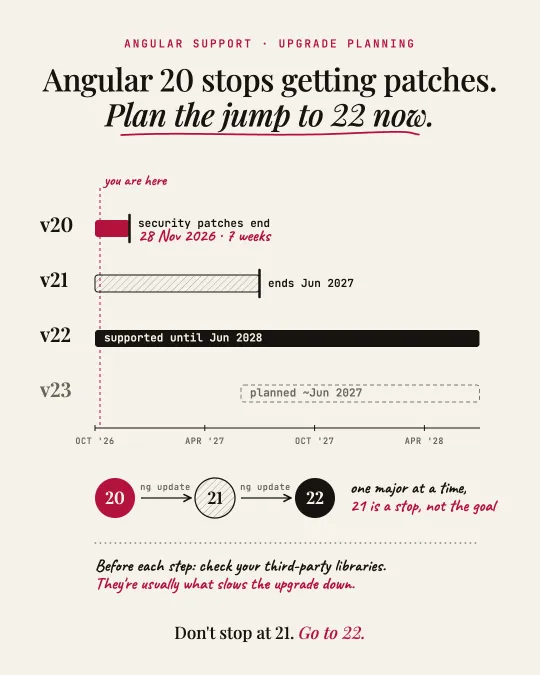
Angular 20 leaves long-term support on 28 November 2026. After that date it gets no more security patches or critical fixes.
If you are still on 20, I would go straight to 22 instead of stopping at 21. Angular 21 leaves long-term support in June 2027, so you would be planning the next upgrade within months. Angular 22 is in active support until June 2027 and in long-term support until June 2028.
Version  Released     Active support ends  LTS ends
22       2026-06-03   2027-06              2028-06
21       2025-11-19   2026-06-03           2027-06
20       2025-05-28   2025-11-19           2026-11-28
How Angular support works now
Each major version gets 12 months of active support with regular updates and patches, then 12 months of long-term support with only critical fixes and security patches. The release page now plans one major version a year.
Plan it as two upgrades
The update guide moves one major version at a time, so 20 to 22 is really 20 to 21, then 21 to 22. Run ng update for each step, let its migrations run, run your tests, and only then take the next step.
Check your third-party libraries first: they are usually what slows an upgrade down. Every component library and state package you use needs a release that supports the Angular version you are moving to.
Sources
I post short notes like this on LinkedIn.
Need help with this?